‘Festival of Farmland Biodiversity’ farm survey results 2023
The National Biodiversity Data Centre hosted a month-long (virtual) ‘Festival of Farmland Biodiversity’ in May 2023. The purpose of the Festival was to encourage more positive engagement on the topic of farmland biodiversity, and to highlight some of the ways that farmers can work to support biodiversity. It invited farmers to share content on social media about biodiversity features on their own farms. engagement around the topic of biodiversity and farmland
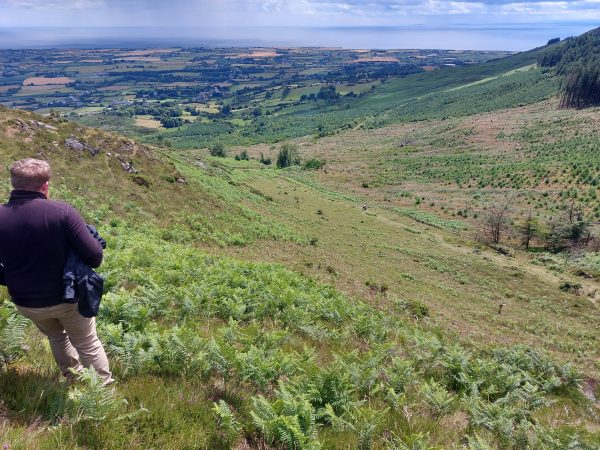
There was good engagement with this year’s Festival of Farmland Biodiversity. As part of the Festival, the National Biodiversity Data Centre offered a prize of a biodiversity survey by its staff to a farmer who shared content using the #FarmlandBiodiversity hashtag. Ciaran Sheelan, @c_sheepdog, a hill farmer on Carlingford Mountain on the Cooley Peninsula, Co. Louth, was the lucky winner.
Ciaran farms with his father Owen and brother Oisín. They can trace back to at least five generations of hill sheep farming on the Cooley mountains. The farm consists of 180 ha of commonage and 10 ha of enclosed land. They keep a flock of 100 Hill North Country Cheviot ewes. They are in the National Parks and Wildlife Service Farm Plan Scheme, with an agreed plan to control bracken.
The mountain is grazed as commonage and is within the ‘Carlingford Mountain’ Special Area of Conservation (SAC). This comprises of Wet Heath, Dry Heath, Alpine and Boreal Heaths, Species-rich Nardus grasslands, Blanket Bog, Transition Mires, Alkaline Fens, Siliceous Screes and Siliceous Rocky Slopes.
The survey identified 223 different species. Plants comprised the largest number of species, followed by moths, birds, bees, hoverflies and butterflies. You can read the full report here https://biodiversityireland.ie/app/uploads/2023/09/Farm-Biodiversity-Survey-2023_Ciaran-Sheelan.-Carlingford-Mountain..pdf
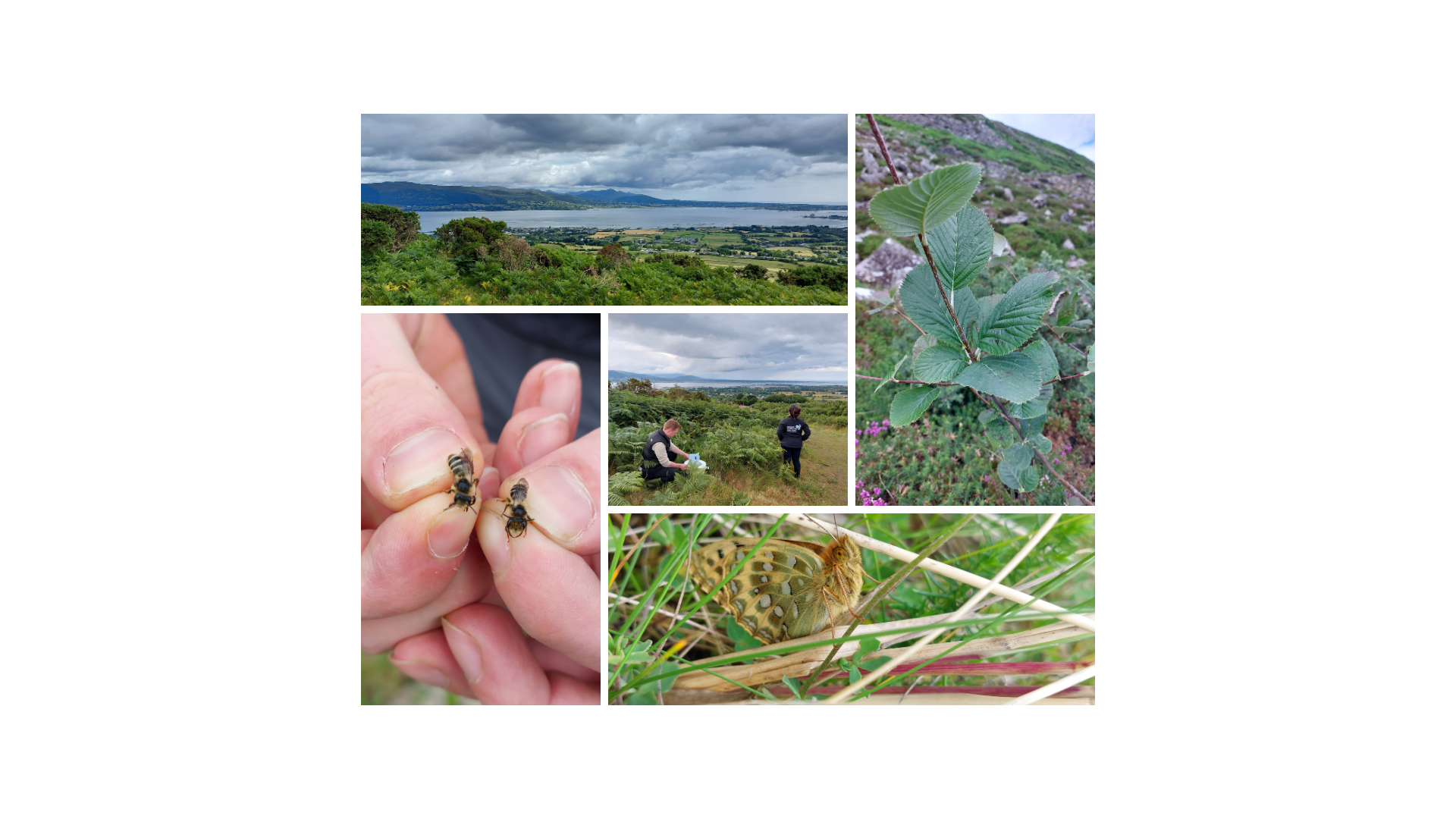
Ciaran joined the staff on the survey of the mountain and was delighted to have noticed a tree growing beside a large rock, that he had not noticed previously. The staff identified it as an Irish Whitebeam Sorbus hibernica.
The Flat-ridged Nomad Bee Nomada obtusifrons was the most notable bee to have been recorded, it’s an endangered species and based on the Irish Bee Red List (2006) it is a ‘Threatened’ species.
At least eight individuals of the Dark Green Fritillary were seen the mountain. They occur mainly around the coast of Ireland and the caterpillar food plant is species of violets. They are listed as nationally “Vulnerable” on the Irish Red List of Butterflies (2010).
We were pleasantly surprised by the diversity of species found during such a brief survey of the mountain. The ongoing management on the mountain to tackle bracken encroachment, through a Farm Plan with the National Parks and Wildlife Service, will benefit some of the more delicate flora and fauna.
The National Biodiversity Data Centre would like to thank Ciaran for allowing us to survey the hill farm and we hope that these results provide inspiration to him and other farms to make their farms more biodiversity friendly.