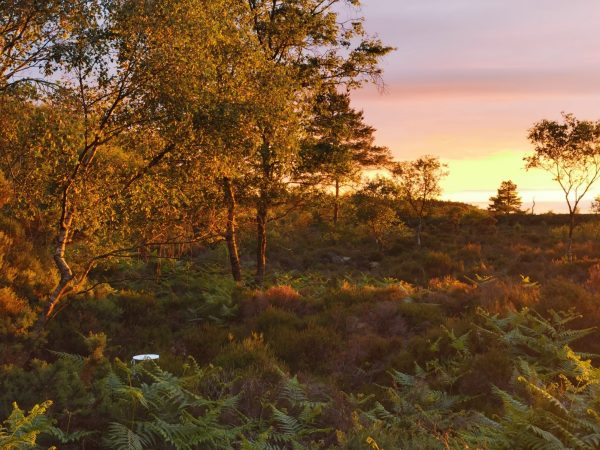
In 2024, 152,711 records were submitted through Ireland’s Citizen Science Portal. Records were received from 8,301 individual recorders across all 32 counties, however from this 8,301 recorders there was a small band of 40, who submitted over 1,000 records.
From this group, there is an even smaller cohort that submitted over 1,000 species, yes not just 1,000 records, but over 1,000 different taxa. This is of course an incredible achievement and we thought it was would a good idea to highlight these recorders to find out how and why they do what they do!
Up next is Rachel McKenna, another very active recorder who also assists us with work on Sawfly species. We asked Rachel for some background into how she got involved with recording, her main interests, best finds and what continues to keep her so involved and active in the recording community:
“Recording flora and fauna has become an integral part of weekly activities commencing in 2018. Amanda Pedlow, Heritage Officer in Offaly first lured me into recording observations on the National Biodiversity Data Centre, with the bribe of a free Swatch for 25 records. The initial fear of wondering how to find 25 species was soon replaced by the query of ‘a free swatch for each 25’?! The swatches provide clear information on species which can be identified, in most cases, by a photograph taken on a smartphone…
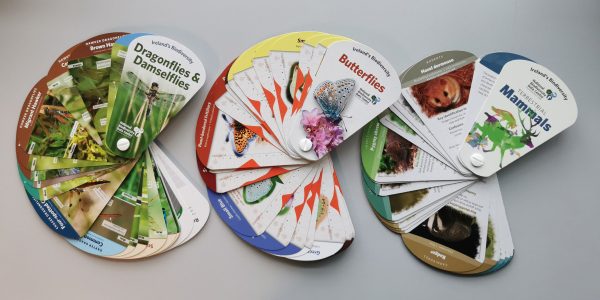
Observing and recording has evoked a personal awakening and appreciation of the astounding beauty and complexity of nature around us, in our gardens, hedgerows, woodland walks and bogs. It evolved over a five-year period, from a general awareness to a thirst for more information, greatly helped by so many patient experts and a key selection of wonderful books. The result is not only lots of NBDC records but the publication of a book in 2024, Step into Nature. The book is set out as a weekly diary to provide a chronological view of some of the finds we can look out for in the weeks and months ahead each year. It covers, briefly, wildflowers, insects and invertebrates, mammals, birds and fungi, generally found in the garden or on local walks. While set in Offaly, most of the highlighted species can be found throughout Ireland.
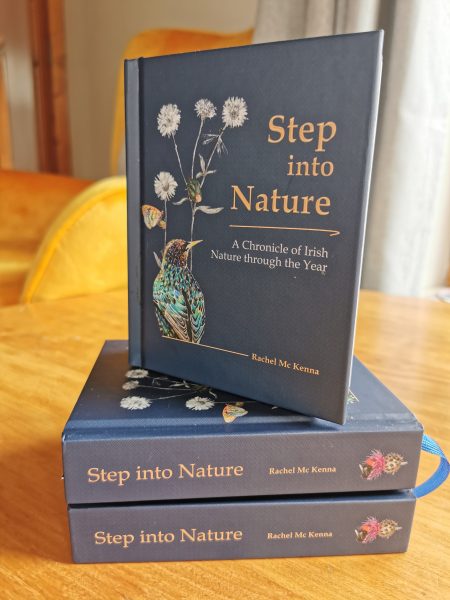
Each plant or insect has been recorded on the National Biodiversity Data Centre (NBDC) assisting with national monitoring, and my own records were used to compile the book.
The five-year period has put me into contact with the most wonderful Facebook pages such as MothsIreland, British and Irish Sawflies and Insects and Invertebrates of Ireland. These are operated by dedicated, steadfast voluntary experts who start each year with the same commitment, providing responses to queries. Recording has introduced me to a whole new and enriching community.
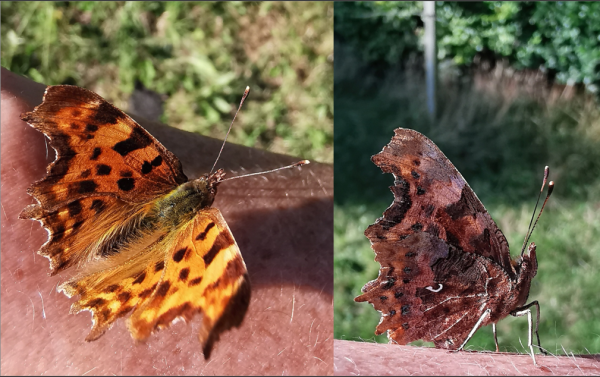
Worldwide, we are witnessing catastrophic biodiversity losses, so it is all the more vital for each individual and community to help in a small but meaningful way, to slow down these losses. Where at all possible, we must make efforts to increase biodiversity in our gardens, workplace, schools and communities. Simple examples are included in the book, leaving patches of nettles where four spring butterflies lay their eggs between March and May (Peacock, Small Tortoiseshell, Red Admiral and the Comma). This led to an extraordinary encounter with a Comma butterfly, only recently record in the midlands, which landed on my arm in the garden.
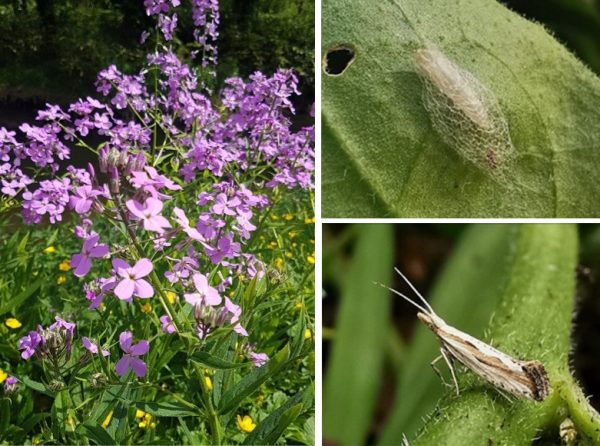
We can also include specific larval foodplants, such as the lovely garden plant Dame’s Violet. Within two years of planting the seeds, we had the tiny moth Plutella porrectella whose caterpillars feed off the leaves – the first recorded in Offaly!
Then, before you know it, you are seeking out specific wildflowers or insects and dragging reluctant family member on walks to bogs, woodlands or lakesides.
I started with garden butterflies and bumblebees, attended NBDC Workshops for practical information and advice. Soon I was out searching for orchids or fungi, looking into hedgerows for shieldbugs, mirid bugs, beetles, ladybirds or hoverflies, peering into bog pools for caddisflies, lakes for dragonflies and the underside of leaves for sawflies or leafmines. It is thankfully, a never-ending adventure.
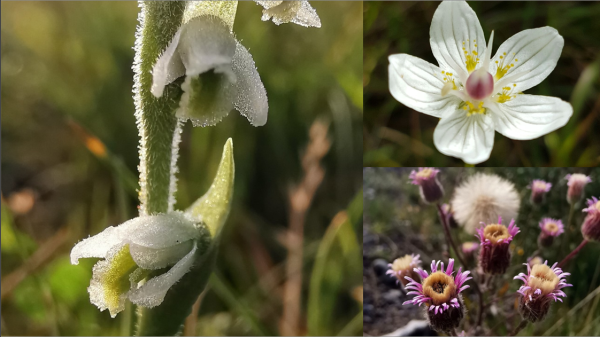
Selecting a favourite is surprisingly simple, it is whatever wonderful wildflower is in season such as Grass-of-Parnassus with its sculptural, waxen leaves, Blue Fleabane with exquisite flowers and dense, fluffy seedheads or the diminutive Autumn Lady’s-tresses, a rare and wonderful find with unfolding, sparkling white-green flowers.
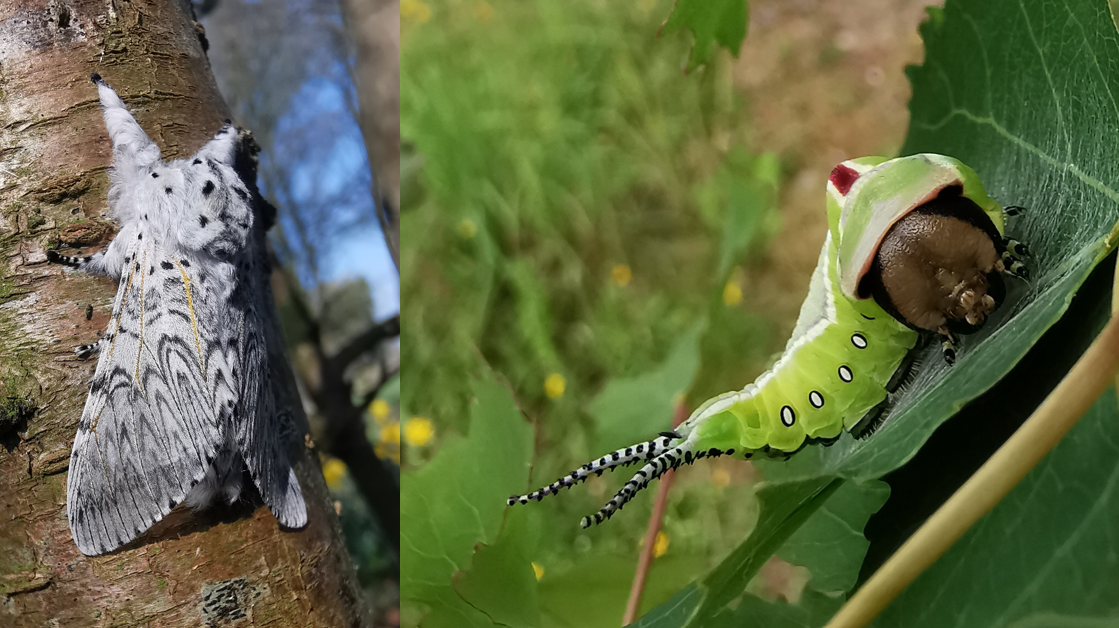
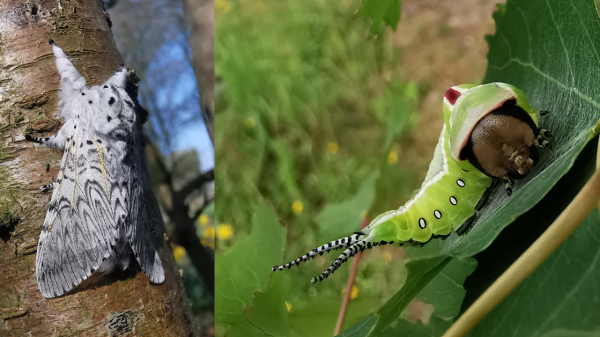
Or perhaps a beautiful Puss Moth resting beside the moth trap, matched only by the astounding larvae.
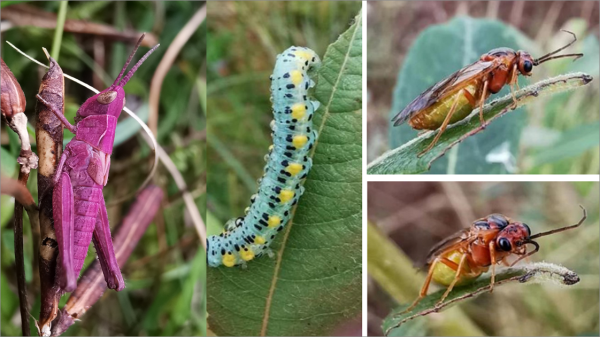
It could also be a Common Green Grasshopper, bright pink due to erythrism, a genetic mutation. Or one of the many sawflies such as Euura ferruginea with its startling blue and yellow larvae and majestic adult. Perhaps selecting a favourite is not that easy.
Each day can provide the opportunity to listen to the voice of nature, to reconnect us, instilling us with a sense of fulfilment. Every discovery is a small triumph, and such encounters have extraordinary, perhaps compulsive, potency. (It has been noted that the NBDC have an aptly named ‘Recorder League’ adding a slightly competitive edge to the process!). By simply slowing down, listening and observing, we can discover miniature wonders of nature. Wonders which fill us with awe when we learn of their complexities. Or those that are so heartachingly beautiful that the memory stays with you, long after the seasons change.
With each new discovery, we can add to our knowledge and in the words of Edward Step (who lent a hand in naming the book), ‘In finding what we sought, we are almost sure to find in addition something that is new to us’, Step, E., Nature Rambles: Winter to Spring.
Throughout the process of recording and writing the book I have come to realise that a walk in nature, of whatever duration, allows time for the soul to breathe.”