
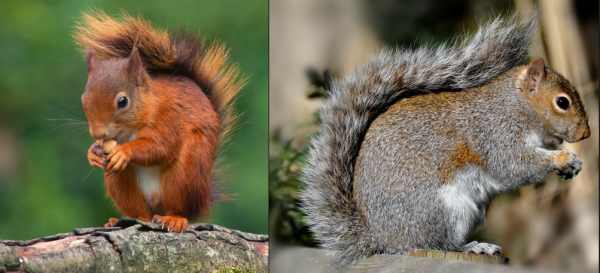
We are carrying out a feasibility study on the landscape scale control of the
invasive grey squirrel and it is important that you have your say
Click Here To Start The Survey

Project Background
The North American grey squirrel is listed as one of 47 invasive animal species of European Union concern. In 2024, The European Union (Invasive Alien Species) Regulations were signed into Irish Law. This regulation requires member states to take action against listed species, eradicating them where feasible. Although grey squirrels are in decline in some parts of Ireland, the species still occurs throughout the Dublin – Wicklow region.
To address this the four Dublin Local Authorities, namely Dublin City Council, Dun Laoghaire Rathdown County Council, Fingal County Council and South Dublin County Council, in partnership with Wicklow County Council, and the National Parks and Wildlife Service, have commissioned a Feasibility Study on the management of grey squirrels at a landscape scale. The study will follow international best practice guidelines on invasive species control and eradications and will assess criteria such as technical feasibility, sustainability, social, political, legal & environmental acceptability, affordability and capacity regarding the skills and infrastructure required.
The project aims to identify the various potential management options, including the potential to eradicate grey squirrels from the wider Dublin-Wicklow area. In order to assess public support for such an initiative, we are particularly interested in hearing from residents of Dublin and Wicklow, however anyone can participate in the survey.
Frequently Asked Questions
• How did grey squirrels arrive in Ireland?
Grey squirrels are native to North America but were introduced to Ireland from Britain by the Earl of Granard, in 1911, in what is believed to have been a single introduction event, involving 12 individuals gifted during a wedding party in Castle Forbes, County Longford. They quickly became widespread throughout the midlands, east and the north of Ireland, replacing the native red squirrel through competition and the spreading of squirrelpox virus. The grey squirrel, which can produce 10 young a year, adapted quickly to the Irish landscape and within decades, in the absence of any significant predation, had become widespread throughout the midlands, the east and the north of Ireland.
• Why are grey squirrels classed as Non-Native or Alien Invasive
Species?
A major impact of the grey squirrel is the replacement of the native European red squirrel. Grey squirrels compete with Ireland’s native red squirrel for the same resources, but greys have several advantages: Greys are larger, they are able to digest seeds and acorns before they are ripe (unlike the red squirrel) and they carry the squirrelpox virus which causes no symptoms in grey squirrels, but is fatal to red squirrels causing a slow and painful death, and devastating local red squirrel populations within weeks. As a result of these advantages the spread of the grey squirrel led to significant declines in Ireland’s native red squirrel.
By 2009 the grey squirrel was present throughout the East of the country. The red squirrel’s range had declined by 20% and the species was considered to be threatened with extinction. Within a few more years the last remnant populations of red squirrels in suburban Dublin (at Killiney and Howth) had gone extinct. Grey squirrels also impacts native woodlands and commercial forestry and through bark stripping, which can reduce timber yield and influences woodland management practices. At a landscape scale, in terms of biodiversity, this can cause a shift away from planting broadleaved trees such as oak, birch, hazel and alder, which are susceptible to grey squirrel damage, which in turn influences habitat suitability for many native woodland species of flora and fauna.
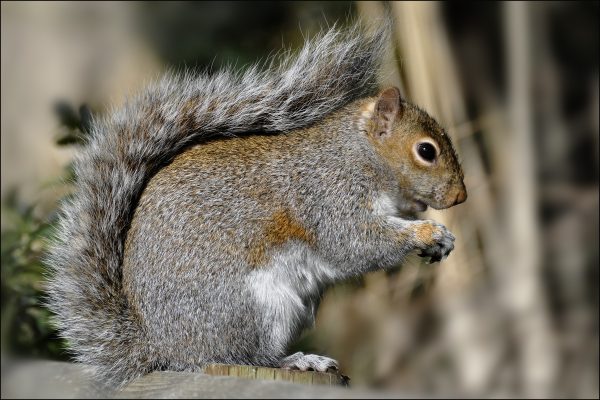
Grey Squirrel by Ita Martin
• But I like grey squirrels so why should I stop feeding them?
Invasive non-native species are one of the five main drivers of biodiversity loss. In 2023, an assessment by the Intergovernmental Platform on Biodiversity and Ecosystem Services (IPBES) found that invasive species have contributed to 60% of documented animal and plant extinctions globally. In July 2024, comprehensive regulations which address deficiencies in Irish law implementing the EU Invasive Alien Species Regulation were signed into law. The European Union (Invasive Alien Species) Regulations 2024 (S.I. No. 374 of 2024) contain important new provisions to address the problem of invasive species. The regulations mean that there is an ongoing requirement to manage grey squirrels, and to eradicate them where feasible. Feeding grey squirrels gives them an even bigger advantage over native red squirrels. If you would like to see red squirrels return to your garden and local parks, you should not participate in feeding grey squirrels.
• How are you proposing to remove grey squirrels?
At this stage we are assessing the feasibility of a landscape scale approach to grey squirrel control in the Dublin-Wicklow region. If a landscape scale approach is deemed feasible, grey squirrels would be trapped using cage traps according to international best practice guidelines. Similar to other invasive species such as mink, once trapped the animals would then be dispatched safely and humanely.
• Are there no alternatives to killing them?
There is currently no alternative in urban and semi-urban environments. Pine martens suppress grey squirrel numbers in woodland habitat and have led to significant declines in the grey squirrel’s distribution in Ireland. However, because pine martens rarely use urban environments, they are not expected to suppress grey squirrels in Dublin or the more urban parts of Wicklow. In Britain, the Animal and Plant Health Agency (APHA) are carrying out research with the aim of developing a species-specific feeder and a vaccine-based contraceptive for grey squirrels. While this could be promising for future grey squirrel control efforts in Southern Britain, where pine martens and red squirrels are absent, it would not be suitable for use in an urban environment, or any areas where other tree-climbing mammals could come into contact with the contraceptive bait.
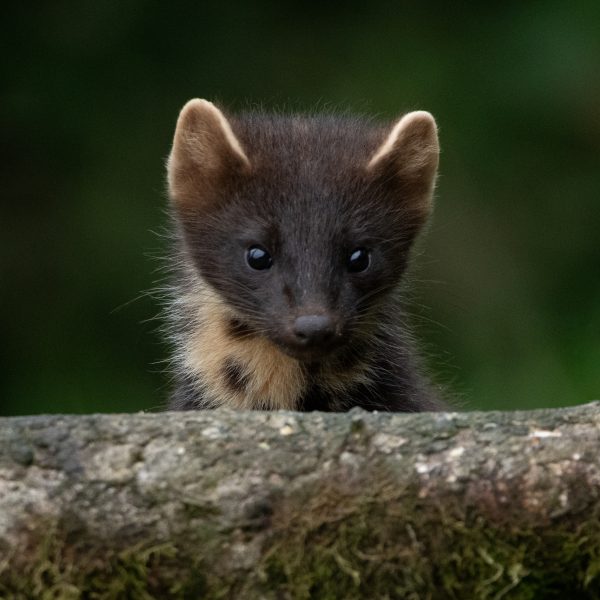
• What about pine martens – do they not control grey squirrels?
Over the last twenty years the grey squirrel’s range in Ireland has decreased significantly, as a result of pine marten recovery. An All-Ireland survey in 2019 found that the grey squirrel is no longer present over much of its longest established range, and is now concentrated mainly along the east coast, southeast and the north of Ireland. There is now an opportunity to remove these remaining grey squirrel populations with limited potential for re-colonisation. However, pine martens do not reach numbers that would suppress grey squirrels in urban environments. If Dublin and Wicklow continue to act as a reservoir for grey squirrels both our red squirrel population and our native woodlands will be under a constant threat of grey squirrel expansion back out from the cities, should circumstances once more begin to favour grey squirrels.
• Why not release pine martens into the parks instead?
As pine martens are recovering naturally in Ireland, and in parts of the UK, such as Scotland, they are being recorded as occasionally using more urban and suburban environments. These environments are now a significant part of the landscape, but wouldn’t have been before the pine marten population’s decline. We are observing this with interest, and it may well be that the species is adapting somewhat to the more anthropogenic, or human-made, built-up environment as their range is increasing. However, whilst this is welcome news in terms of pine marten recovery, there is no evidence, nor expectation, that pine martens would reach densities high enough to suppress grey squirrels in these environments, nor would it be humane to translocate individual pine martens from their more natural habitat into these environments as an experiment.
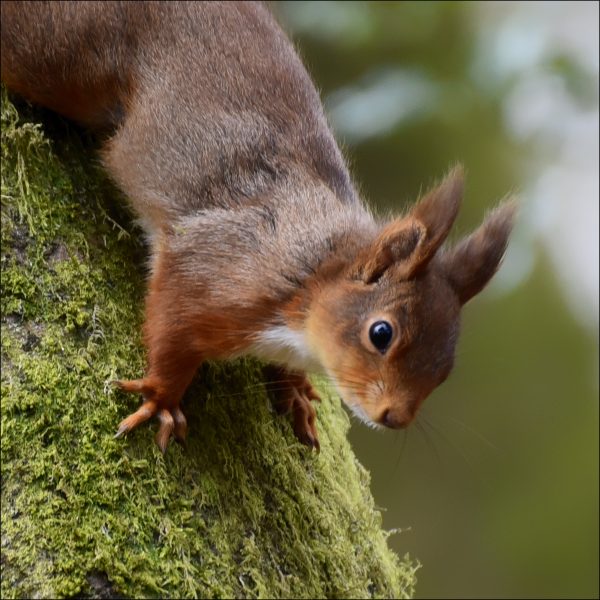
• Could red squirrels come back to my park/garden?
Yes. Once grey squirrels are no longer present, red squirrels will use the same habitat that grey squirrels have occupied. The red squirrel has already made a remarkable recovery where the grey squirrel is no longer present in the Irish midlands. Red squirrels do not reach as high densities as grey squirrels in any habitat, including urban environments, so they may not be as easily visible. However, if you have grey squirrels in your local park or using the bird feeder in your garden, there is every possibility that red squirrels will use these too, once grey squirrels are no longer present. You can read a blog post about red squirrels re-populating Aberdeen city centre, as a result of the grey squirrel eradication by Saving Scotland’s Red Squirrels HERE
• What do you mean by “landscape scale”?
Taking a landscape scale approach to grey squirrel control means treating all of the grey squirrels in the continuous Dublin-Wicklow region as one population. In comparison, a local or site-based approach would involve treating, all of the grey squirrels in a specific area as a distinct population. Whilst a landscape scale approach is certainly a bigger undertaking, if sufficient coverage of the landscape is achieved, the impact should be permanent, and red squirrels would be expected to naturally return to the environment, as we have seen in other landscape scale approaches such as the grey squirrel eradications from Anglesey and Aberdeen.
• How can I get involved?
At this stage we are assessing the feasibility of a landscape scale project in the Dublin-Wicklow region. One element of the study is to assess the public support for such an initiative, and we are particularly interested in hearing from residents of Dublin and Wicklow, however anyone can participate in the survey.