• About Us
  • Conservation
  • Monitoring
  • Online Courses
  • Workshops
  • Publications
  • Shop
Menu
  • About Us
  • Conservation
  • Monitoring
  • Online Courses
  • Workshops
  • Publications
  • Shop
Surveys > Partner Surveys

Urban Fox Survey

The Urban Fox Survey invites the public to help gather information on Red Fox distribution and expand the knowledge on their relationship with urban environments in Ireland.
Submit your Urban Fox sightings here!

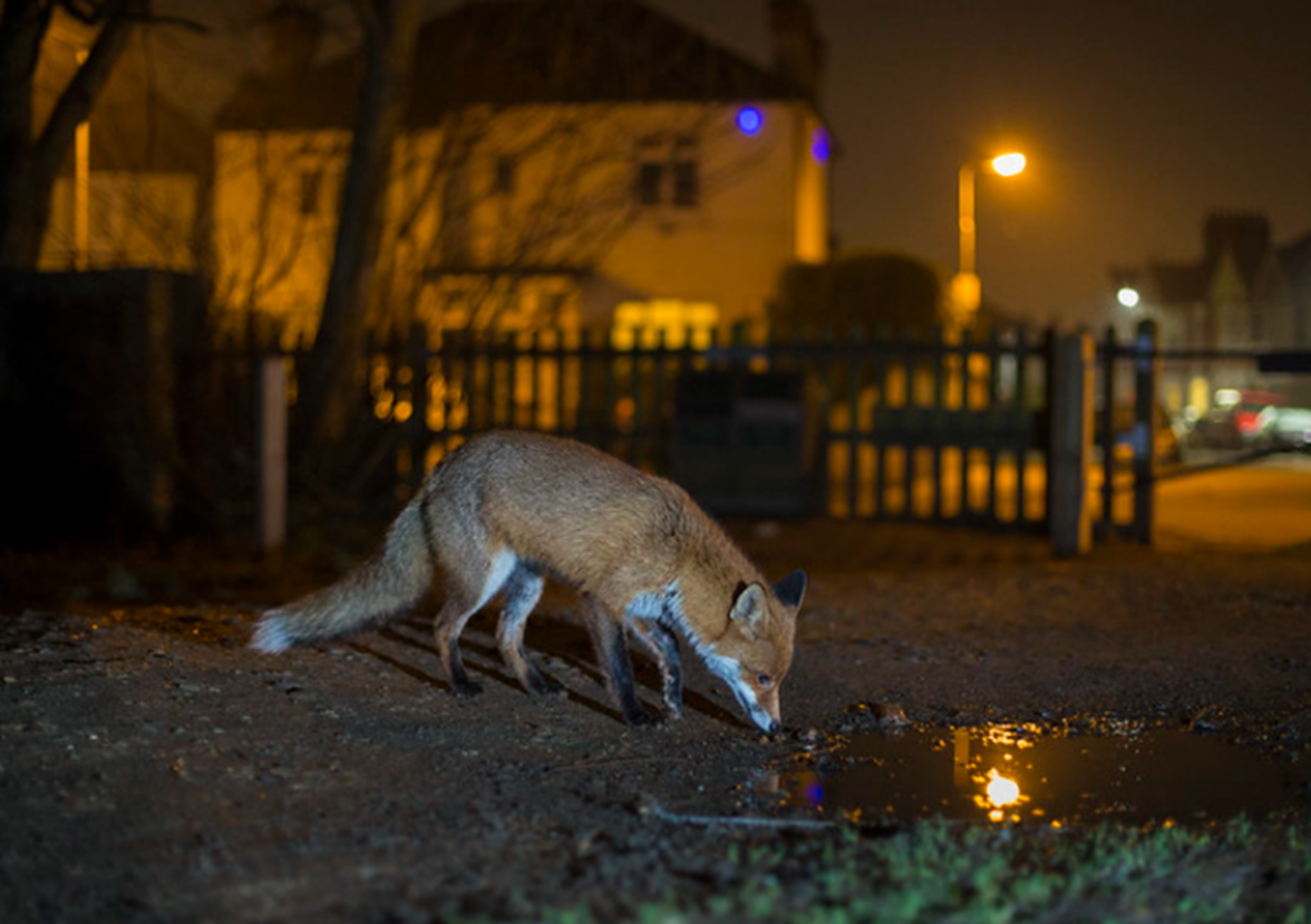
Urban Fox – Jamie Hall

Why do we need an Urban Fox Survey?

The urban ecology of our wild animals has become increasingly relevant with the spread of urbanisation across the globe. Red Foxes are a prime example of a species learning to adapt to these rapidly changing environments. Understanding their distribution and behaviour across Irish urban areas can shed light on the needs of the animals and the potential of cities to provide for them.

This project will provide valuable data for conservation planning in Ireland and finding solutions for potential human/wildlife conflicts. Our study will focus on the 7 most populated cities/towns across the island of Ireland; Dublin, Belfast, Cork, Limerick, Derry, Galway, and Waterford.
Red Fox

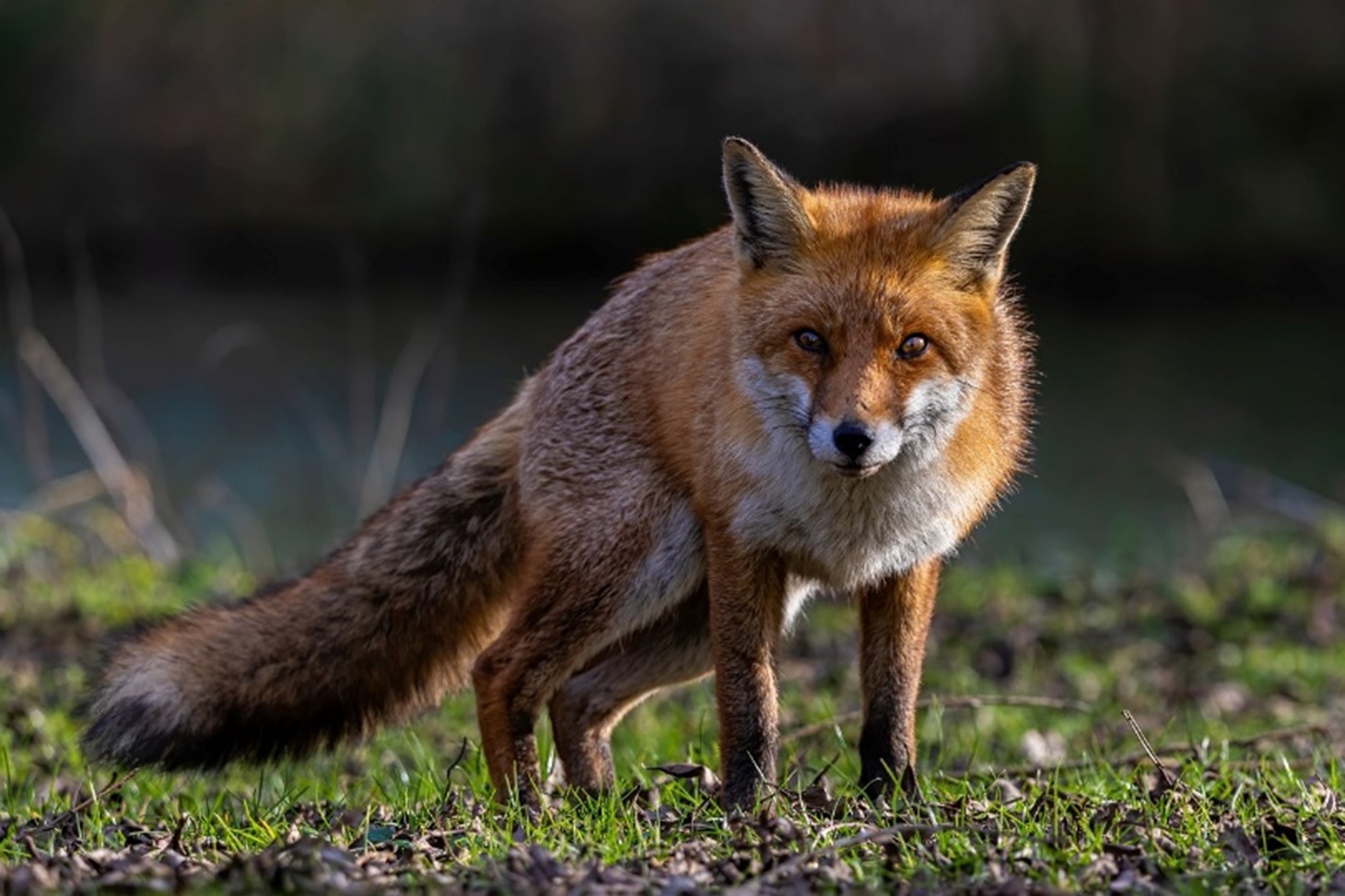
Red Fox – Jon Pauling

The Red Fox

Red Foxes (Vulpes vulpes) are widespread across Ireland and are characterised by their red fur, bushy tails and dog-like appearance.

This versatile species is primarily nocturnal with a diverse diet which allows it to exploit a wide range of habitats. As omnivorous opportunists, urban foxes feed mostly on scavenged meat, invertebrates, fruit, and anthropogenic food in cities.

Fox activity increases during mating season in January and February and vixens birth cubs between March and April. Urban foxes are frequent visitors to residential areas and often seek gardens to raise cubs.
Credit: Marc Baldwin

Signs of Foxes

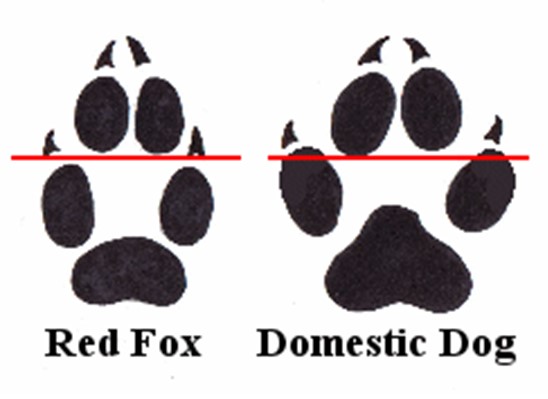
Evidence of fox activity can be found in various forms, including tracks, scat, prey remains, fur clumps, and trampled flowerbeds.

The paw prints of foxes vary from dogs with a more oval pad pattern, with the central digits sitting in front of the outer pair.

Due to their broad diet, fox scat can be tightly packed with a range of contents including fur, bone shards, feathers, seeds, and beetle chitin. They can be differentiated from dog faeces by the presence of a tapered curl at the end. Foxes can harbour parasites so we recommend you don’t handle their droppings!

Who runs the Urban Fox Survey?

The urban fox survey is a project of the University of Galway, supported by the National Biodiversity Data Centre.

Submit your Urban Fox sightings here!

Contact Us


For any queries regarding the Urban Fox Survey project, please email urbanfoxsurvey@gmail.com

Please consider supporting the project further by following the following social media platforms!


  • Contact Us
  • 051 306 240
  • National Biodiversity Data Centre
    Beechfield House,
    South East Technological University West Campus,
    Carriganore,
    Co. Waterford,
    Ireland.
    X91 PE03


The National Biodiversity Data Centre is a Company Limited by Guarantee with Charity status.

Registered Charity Number: 20206927

Heritage council logo


  • Privacy
We made this!
  • Home
  • About
    • Strategic Objectives
    • Global Biodiversity Information Facility
      • Ireland’s GBIF profile
      • The GBIF Network
      • Latest news at GBIF
      • GBIF Science Review
  • Monitoring & tracking change
  • Assisting conservation
  • Ireland’s Biodiversity Learning Platform
  • Training Events and Workshops
    • Online Courses
    • Events & Workshops
    • Join the Mailing List
  • Publications
  • Biodiversity Ireland’s Top 10
  • Local communities & NGOs
  • Farmers
  • Public Bodies
  • Researchers
  • Videos
  • Shop
  • News and Events
  • Procurement
  • Jobs & Opportunities
  • Data Standards
We use cookies on our website to give you the most relevant experience by remembering your preferences and repeat visits. By clicking “Accept”, you consent to the use of ALL the cookies. However you may visit Cookie Settings to provide a controlled consent. You can view our privacy policy here.
Cookie settingsACCEPT
Privacy & Cookies Policy

Privacy Overview

This website uses cookies to improve your experience while you navigate through the website. Out of these cookies, the cookies that are categorized as necessary are stored on your browser as they are essential for the working of basic functionalities of the website. We also use third-party cookies that help us analyze and understand how you use this website. These cookies will be stored in your browser only with your consent. You also have the option to opt-out of these cookies. But opting out of some of these cookies may have an effect on your browsing experience.
Necessary
Always Enabled
Necessary cookies are absolutely essential for the website to function properly. This category only includes cookies that ensures basic functionalities and security features of the website. These cookies do not store any personal information.
Non Necessary
Any cookies that may not be particularly necessary for the website to function and is used specifically to collect user personal data via analytics, ads, other embedded contents are termed as non-necessary cookies. It is mandatory to procure user consent prior to running these cookies on your website.
Save & Accept