• About Us
  • Conservation
  • Monitoring
  • Online Courses
  • Workshops
  • Publications
  • Shop
Menu
  • About Us
  • Conservation
  • Monitoring
  • Online Courses
  • Workshops
  • Publications
  • Shop

HE3G Juncus squarrosus – Rhytidiadelphus loreus heath


  • Heaths (HE)
  • HE3 Vaccinium myrtillus – Racomitrium lanuginosum group
  • HE3G Juncus squarrosus – Rhytidiadelphus loreus heath
Scientific name:
Juncus squarrosus – Rhytidiadelphus loreus heath
Common name:
Heath Rush – Little Shaggy-moss heath
Community code:
HE3G
Full PDF Synopsis
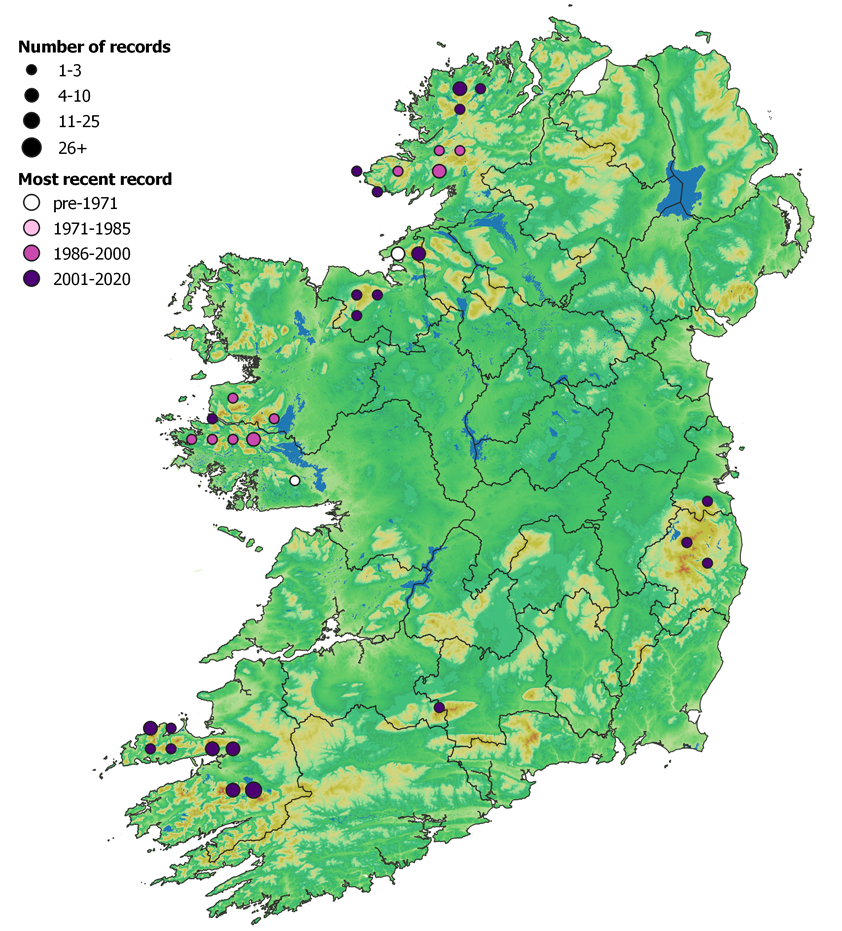
HE3G map: Juncus squarrosus – Rhytidiadelphus loreus heath
HE3G: Juncus squarrosus – Rhytidiadelphus loreus heath

Vegetation

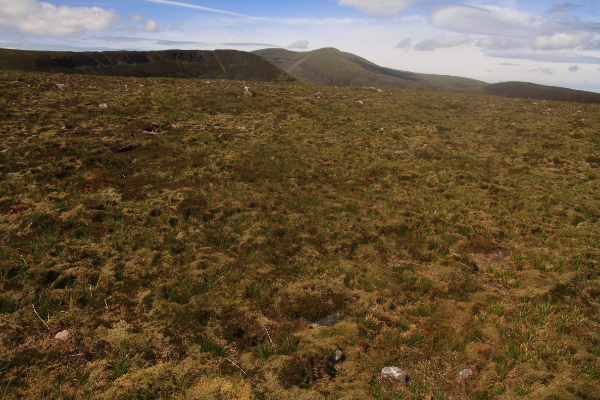
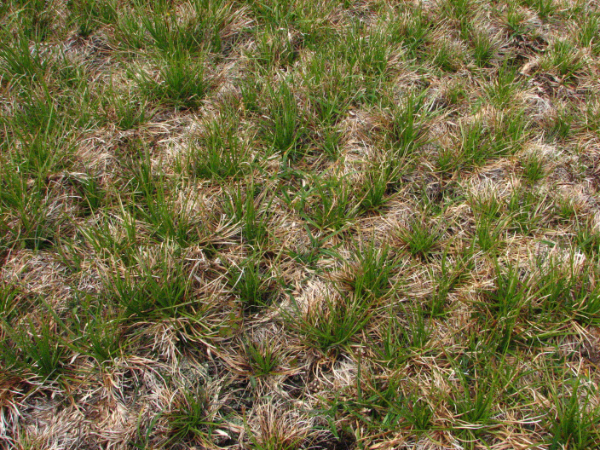
This heathy upland community is dominated by a combination of Calluna vulgaris and the tough, wiry leaves of Juncus squarrosus, attended by some low growth of Vaccinium myrtillus. Frequently, there is some sparse cover of Galium saxatile with its diminutive white flowers or a grassy element provided by Agrostis capillaris, Agrostis canina/vinealis or Nardus stricta. Empetrum nigrum is occasional here as also are Eriophorum vaginatum and Eriophorum angustifolium which occur on deeper peats. The bryophyte layer is quite diverse. The pleurocarps Rhytidiadelphus loreus, Hypnum jutlandicum and Hylocomium splendens are constants as are the whitish-grey patches of Racomitrium lanuginosum and the scarlet hummocks of Sphagnum capillifolium. Liverworts tend to be a feature, the most common being Scapania gracilis, but Diplophyllum albicans, Lophozia ventricosa, Calypogeia muelleriana and Anastrepta orcadensis may also be found.

Ecology

This is a community of acidic, infertile, wet upland peaty soils, prominent in areas where sheep grazing has favoured the rhizomatous expansion of Juncus squarrosus. It usually represents a variant of montane heath and may occur on shallow soils where upland bog has eroded away. It also occurs on deeper soils where it forms a rather poor version of upland blanket bog itself. Mean altitude = 641 m, n = 63; mean slope = 9.2°, n = 63; mean extent of bare rock = 0.8%, n = 63.

Sub-communities

No sub-communities have been described for this community.

Similar communities

From other heath types, the abundance of Juncus squarrosus helps distinguish this community. In HE3C Calluna vulgaris – Nardus stricta heath, this rush can also be plentiful but there Nardus tends be a dominant. Juncus squarrosus also occurs in HE3A Calluna vulgaris – Hylocomium splendens heath, but there Racomitrium lanuginosum is seldom found.

Conservation value

Most examples of this community correspond with EU HD Annex I habitat 4060 Alpine and subalpine heath. On deeper soils, however, it may correspond to a rather degraded form of habitat 7130 Blanket bogs (active)*. It is a species-rich community (species/4 m2 = 21.2, n = 75).

Management

These heaths and bogs, which often form parts of commonages, may be used as rough grazing land (typically for sheep). Indeed, the presence of this community may be an indicator of overgrazing. Climate change threatens arctic-alpine species which are restricted to montane communities such as this.

  • Contact Us
  • 051 306 240
  • National Biodiversity Data Centre
    Beechfield House,
    South East Technological University West Campus,
    Carriganore,
    Co. Waterford,
    Ireland.
    X91 PE03


The National Biodiversity Data Centre is a Company Limited by Guarantee with Charity status.

Registered Charity Number: 20206927

Heritage council logo


  • Privacy
We made this!
  • Home
  • About
    • Strategic Objectives
    • Global Biodiversity Information Facility
      • Ireland’s GBIF profile
      • The GBIF Network
      • Latest news at GBIF
      • GBIF Science Review
  • Monitoring & tracking change
  • Assisting conservation
  • Ireland’s Biodiversity Learning Platform
  • Training Events and Workshops
    • Online Courses
    • Events & Workshops
    • Join the Mailing List
  • Publications
  • Biodiversity Ireland’s Top 10
  • Local communities & NGOs
  • Farmers
  • Public Bodies
  • Researchers
  • Videos
  • Shop
  • News and Events
  • Procurement
  • Jobs & Opportunities
  • Data Standards
We use cookies on our website to give you the most relevant experience by remembering your preferences and repeat visits. By clicking “Accept”, you consent to the use of ALL the cookies. However you may visit Cookie Settings to provide a controlled consent. You can view our privacy policy here.
Cookie settingsACCEPT
Privacy & Cookies Policy

Privacy Overview

This website uses cookies to improve your experience while you navigate through the website. Out of these cookies, the cookies that are categorized as necessary are stored on your browser as they are essential for the working of basic functionalities of the website. We also use third-party cookies that help us analyze and understand how you use this website. These cookies will be stored in your browser only with your consent. You also have the option to opt-out of these cookies. But opting out of some of these cookies may have an effect on your browsing experience.
Necessary
Always Enabled
Necessary cookies are absolutely essential for the website to function properly. This category only includes cookies that ensures basic functionalities and security features of the website. These cookies do not store any personal information.
Non Necessary
Any cookies that may not be particularly necessary for the website to function and is used specifically to collect user personal data via analytics, ads, other embedded contents are termed as non-necessary cookies. It is mandatory to procure user consent prior to running these cookies on your website.
Save & Accept