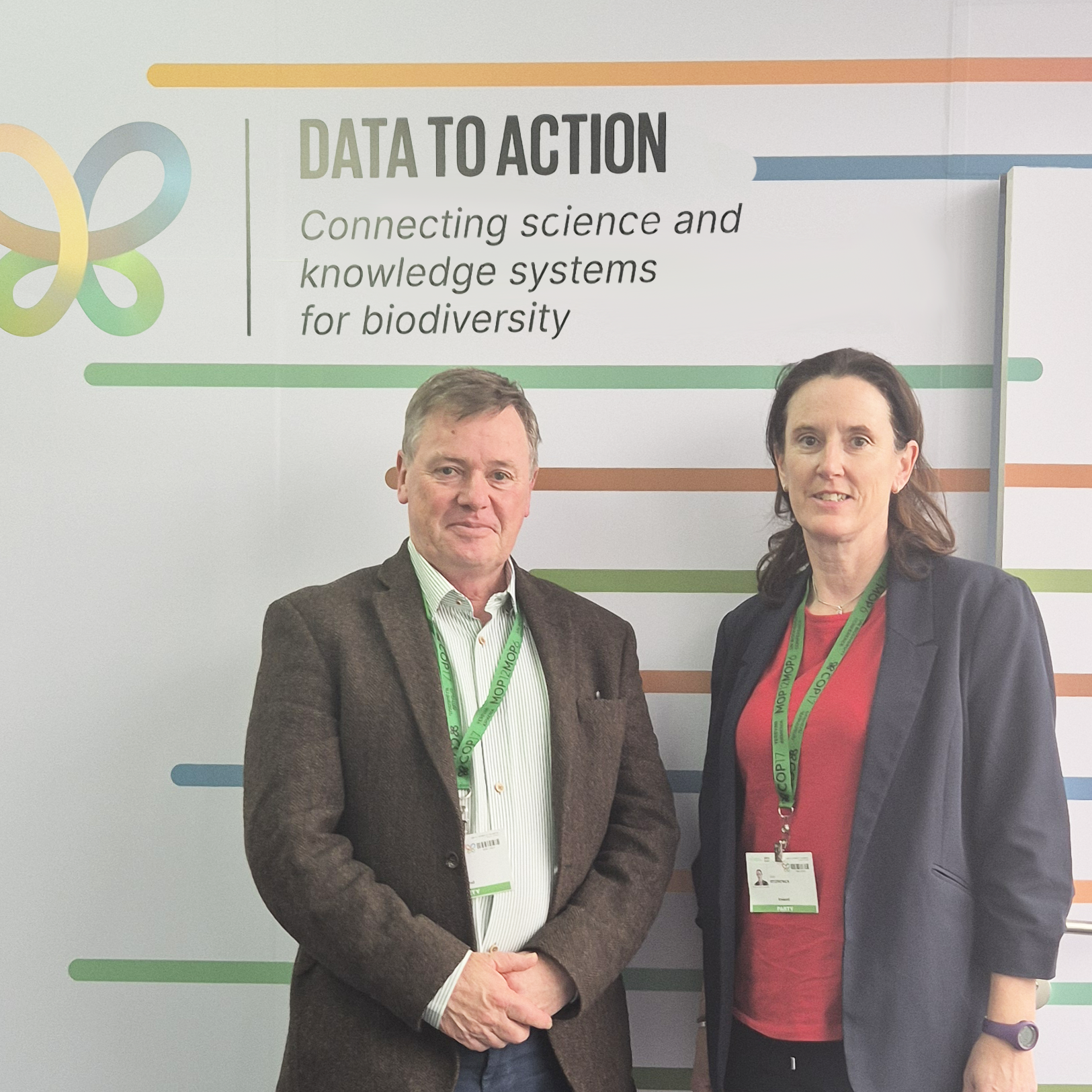
I write this while attending the 17th Conference of the Parties (COP17) to the Convention on Biological Diversity in Yerevan, Armenia. This is the first COP I attended with a joint role – as part of the Irish delegation but also representing the Centre as Ireland’s Node of the Global Biodiversity Information Facility (GBIF). Over the two-week event, as many as 15,000 participants will have attended, comprising scientists, government officials, representatives of international organisations, businesses, indigenous communities and media. The COP is the two-yearly meeting where the 196 parties to the convention, 195 states and the European Union assemble to review progress with delivery of the Convention and to consider possible future directions. The primary focus of COP17 is evaluating and accelerating the mid-point implementation of the Kunming-Montreal Global Biodiversity Framework and its 23 targets, under the theme ‘Taking Action for Nature’. This is set against a background where the recently published State of Biodiversity Action report provides a sobering assessment of the scale of the task that remains if the Convention on Biological Diversity is to deliver on the ambitions outlined in the Kunming-Montreal Global Biodiversity Framework. COP17 is particularly important for Ireland. Having the EU Presidency means that Irish officials are leading the negotiations on behalf of the EU, and their professionalism and commitment at the event is doing us all proud.
We are hosting an event in the #DatatoActionPavilion under the Connecting Science and Knowledge Systems for Biodiversity theme to highlight the All-Ireland Pollinator Plan, which is managed by the National Biodiversity Data Centre. This will demonstrate the transformative approach to empowering people through biodiversity data, a key element of Target 21 of the Kunming-Montreal Global Biodiversity Framework.
COP17 has been a huge learning experience for me, but as I reflect on the event I think there are two key take home messages. First, in the midst of all the stifling processes and tortuous negotiations, there is a huge cohort of extremely knowledgeable, professional and committed people all deeply frustrated by the inability to increase the scale and pace of global action to address biodiversity loss. Tackling the obstacles and constraints to delivering more effective actions remains a challenge at global, national and local levels.
Second, one of the key messages of the State of Biodiversity Action report relates to improving the availability of data and knowledge for decision-making. Delegates consistently referred to challenges of data availability and access, data fragmentation across institutions and platforms, insufficient technical and technological infrastructure, insufficient institutional coordination and data governance, and the need to invest in monitoring systems and to build capacity. We are fortunate that the Government of Ireland has secured the long-term future of the National Biodiversity Data Centre, has given it a strong mandate, and continues to invest in its work, creating the conditions where Ireland can address this challenge.
I return to Ireland with a renewed energy to redouble efforts to engage with all our partners to deliver more coordinated and collaborative data-sharing systems, stressing the strategic value of shared efforts to improve access and availability to more and better-quality biodiversity data. This would be one very tangible achievement Ireland could report, when reporting on delivery of the Kunming-Montreal Global Biodiversity Framework in 2030.
– Dr Liam Lysaght, CEO at the National Biodiversity Data Centre