
Fásra
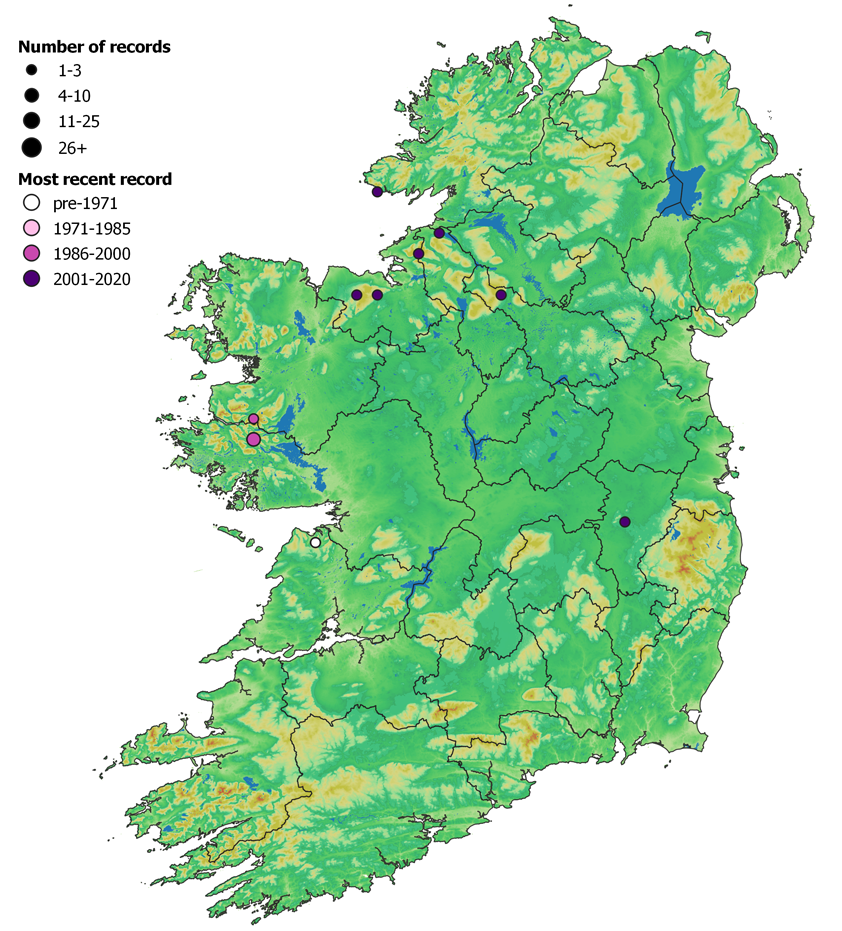
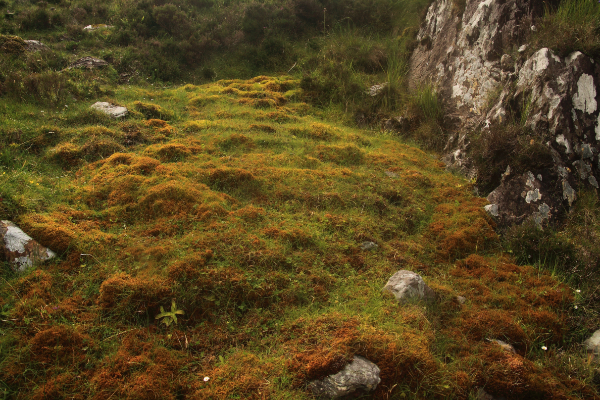
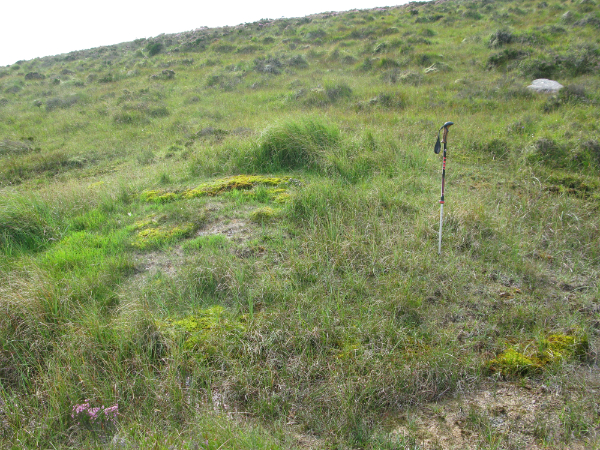
This bryophyte-rich spring assemblage is typically dominated by Palustriella commutata often accompanied by the tufted shoots of Bryum pseudotriquetrum. Also frequently present are some patches of Fissidens adianthoides and Philonotis fontana. Thallose liverworts are often found, usually Aneura pinguis but also Pellia endiviifolia, Pellia epiphylla and Riccardia multifida. Vascular plants are usually not abundant and their main cover is provided by graminoids, particularly Carex viridula, Carex panicea, Agrostis stolonifera and Festuca rubra. Some creeping stems of Anagallis tenella may occasionally be seen, however, as may the rosettes of the insectivorous Pinguicula vulgaris.
Éiceolaíocht
This is a community of base-rich springheads, upwellings and seepage points. It can occur on upland hillslopes, within fens and on the coast. Precipitation of calcium carbonate can lead to the deposition of tufa and the creation of petrifying springs.
Fo-phobail
No sub-communities are currently described.
Pobail chosúla
The abundance of Palustriella commutata differentiates this community from other wetland types, including the otherwise rather similar FE1C Carex viridula – Carex panicea fen.
Luach caomhnaithe
Examples with tufa formation constitute the EU HD Annex I priority habitat 7220 Petrifying springs*. It is quite species-rich (species/4 m2 = 21.8, n = 13).
Bainistíocht
These springs can be impacted by alterations to the natural hydrology, high levels of phosphates and nitrates and trampling by livestock.